 CANONICAL
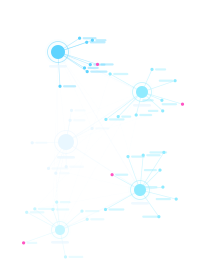
RELATIONSHIPS
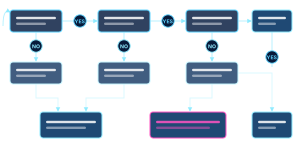
SIGNALS

Evidence across sources
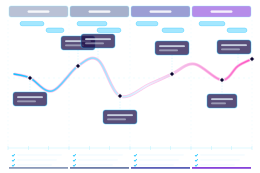
Evidence spans platforms, reports, documents, and teams.
MITRE · ENTERPRISE AI · EXPERIENCE INTELLIGENCE
Connecting AI, operational evidence, and human centered insight to understand employee experience across the enterprise.
EXECUTIVE SUMMARY
At MITRE, I helped shape an Enterprise Experience Intelligence capability that connects human centered design, AI, operational evidence, research, process intelligence, and enterprise systems. My work focused on developing the evidence strategy and experience model, mapping relevant enterprise sources, and exploring how AI can help teams connect signals and identify questions for further investigation.
The goal was to make existing evidence more useful by connecting it to where friction may occur, who may be affected, and what questions could guide further investigation.
01 · THE ENTERPRISE CHALLENGE
An employee may rely on several systems, policies, approval steps, support channels, and teams to complete one task. I framed the opportunity as connecting evidence across that journey so teams can better understand where friction may occur and what context warrants further investigation.
Evidence spans platforms, reports, documents, and teams.
A single task may involve multiple systems and processes.
Operational measures can show activity and point to questions about its causes.
Reviewing evidence across formats calls for careful synthesis.
Connected evidence can help leaders assess whether a pattern merits broader attention.
02 · THE TRANSFORMATION OPPORTUNITY
I developed a model for bringing evidence from existing sources into a shared view. It is intended to help teams examine patterns, identify questions for research, and consider where action may create value. The approach complements research, service management, analytics, and operational expertise by making their evidence easier to consider together.
03 · THE EXPERIENCE INTELLIGENCE MODEL
Together, these dimensions offer a shared way to interpret experience evidence from multiple sources.
04 · MAPPING THE ECOSYSTEM
I developed an approach to inventory and classify approximately 400 enterprise applications, extending the view beyond application names and owners.
For each potential source, I considered ownership, supported journeys, evidence type, existing reporting, access constraints, and its potential contribution to experience intelligence. This creates a basis for deciding which sources merit closer exploration.
05 · EVIDENCE STRATEGY
I mapped how existing sources such as ServiceNow, WalkMe, Azure Monitoring, Power BI, transactional systems, and process documentation could contribute evidence. The strategy is to connect relevant information while preserving the role of each source as its authoritative record.
06 · AI AS AN INTELLIGENCE LAYER
07 · DESIGNING FOR TRUST
I incorporated evidence visibility and human review into the proposed approach. For each interpretation, teams should be able to inspect the evidence, its source and recency, what may support or challenge it, and what remains uncertain before deciding what it means or what to do.
08 · BUILDING THE EVIDENCE PIPELINE
I prototyped an automated workflow in Power Automate to bring user generated artifacts, including journey maps, survey results, and synthesized workshop and interview reports, from enterprise sources into a structured intelligence environment. Each artifact is represented in a structured JSON file, with review, traceability, and governance built into the workflow.
09 · HUMAN-CENTERED INTELLIGENCE
10 · EXPERIENCE INTELLIGENCE ARCHITECTURE
Applications, service platforms, monitoring, analytics, research, process documentation, employee feedback
Operational, behavioral, transactional, research, process, and service evidence
Employee journeys, friction themes, experience patterns, hypotheses, research opportunities
Classification, normalization, correlation, pattern detection, journey mapping, AI supported synthesis
Prioritization, leadership insight, investment, product, process, and research direction
11 · GOVERNANCE BEFORE SCALE
Documented expectations for assessing whether sources are relevant, current, and reliable enough to support analysis.
Added guidance to identify gaps in whose experiences are represented and to avoid treating incomplete evidence as a complete picture.
Outlined how findings should link back to their sources and make the supporting evidence and assumptions clear to reviewers.
Documented guardrails for using employee information appropriately and limiting access to what is needed.
Included guidance for surfacing conflicting or uncertain signals and having people validate interpretations before they inform action.
I took a human centered approach to governance, translating trustworthy AI principles into practical guidance for the ESI Toolkit. I documented how the capability should handle evidence, interpret signals, protect sensitive information, and involve people in reviewing AI generated findings.
12 · MY ROLE
I translated leadership direction into a scoped approach with immediate steps and a longer term path. I led discovery, modeling, and prototyping to define how an IT/ET CX capability could understand employee experience across the enterprise.
A connected foundation linking employee profiles and journeys to friction, enterprise signals, applications and services, and potential resolution paths. I defined the supporting attributes and JSON-based views, prototyped an automated SharePoint-to-JSON ingestion workflow, and led workshops to shape the IT/ET CX capability and its reporting.
The Enterprise Situational Intelligence app brings together a current view of employee experience issues, affected employees, financial impact, and issue context for senior leaders. This information can help leaders assess significance and inform decisions about where to focus attention and investment.
THE TRANSFORMATION
Enterprise Experience Intelligence is a developing approach to connecting people, process, technology, data, research, AI, governance, and experience. The work defines a path for using connected evidence to support learning and inform future decisions.